ClimaColour Code
Making environmental data visible through light.
A physical computing prototype that translates real-time temperature and humidity data into colour, brightness and pulse behaviour.
Environmental conditions such as temperature and humidity are usually felt rather than seen.
ClimaColour Code explores how this invisible data can be given a visual language. Real-time sensor readings are processed through a rule-based behaviour system and translated into changing colour, brightness and pulse patterns, creating a physical representation of the surrounding environment.
Temperature and humidity are usually experienced physically but remain visually invisible.
Because environmental discomfort is difficult to see, people may be less aware of changing indoor conditions and less responsive to their energy use, comfort, and surrounding environment.
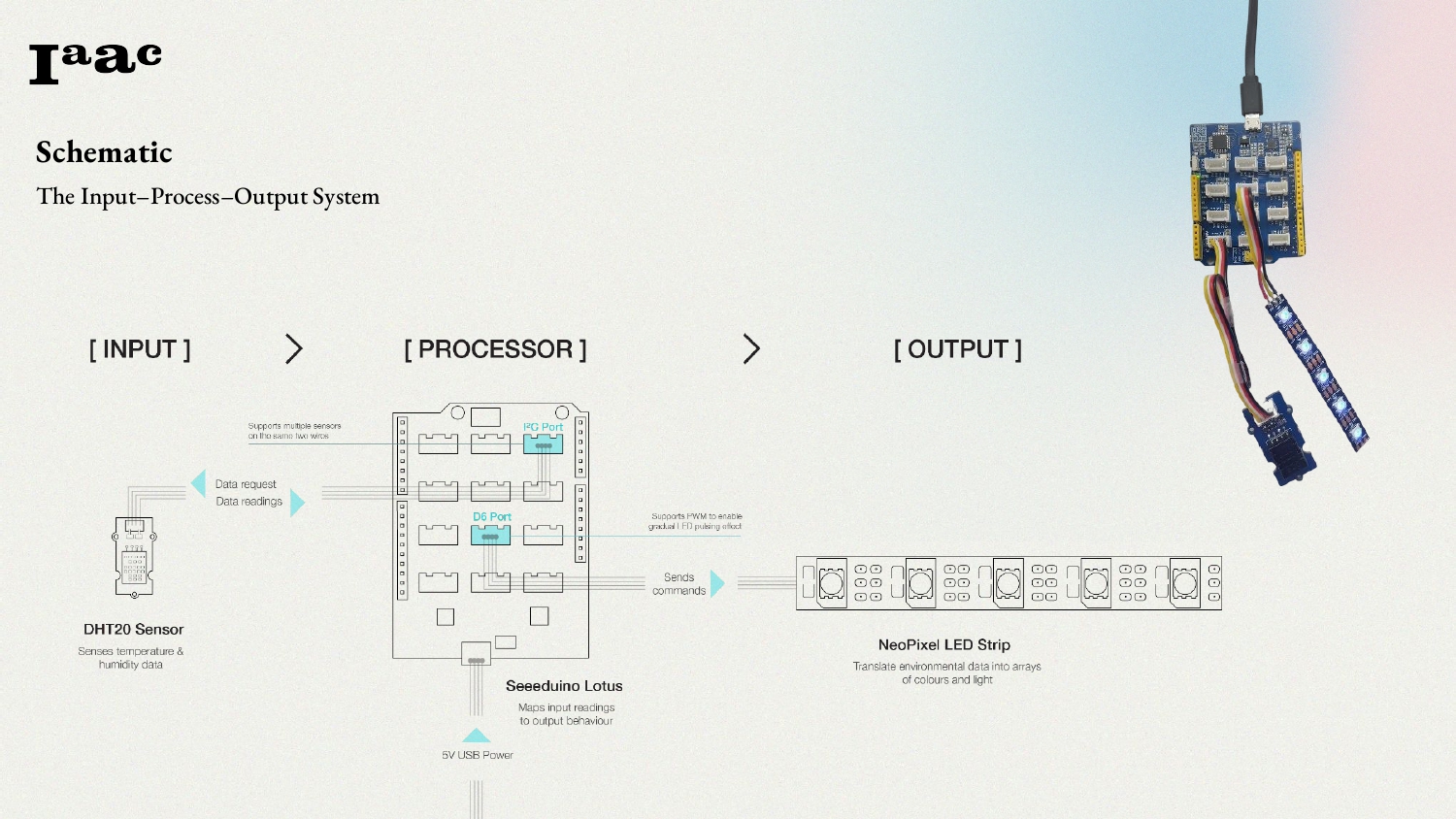
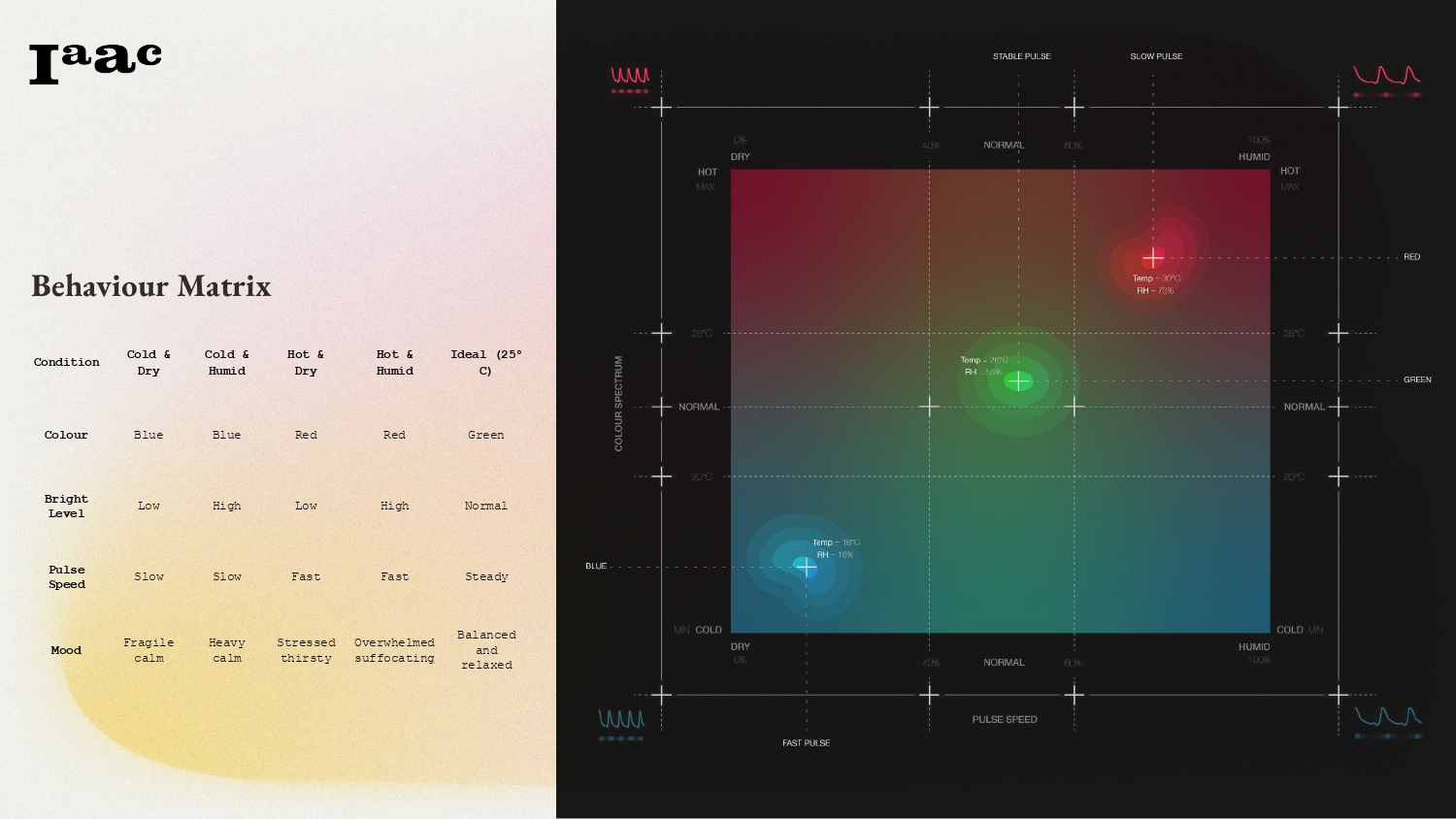
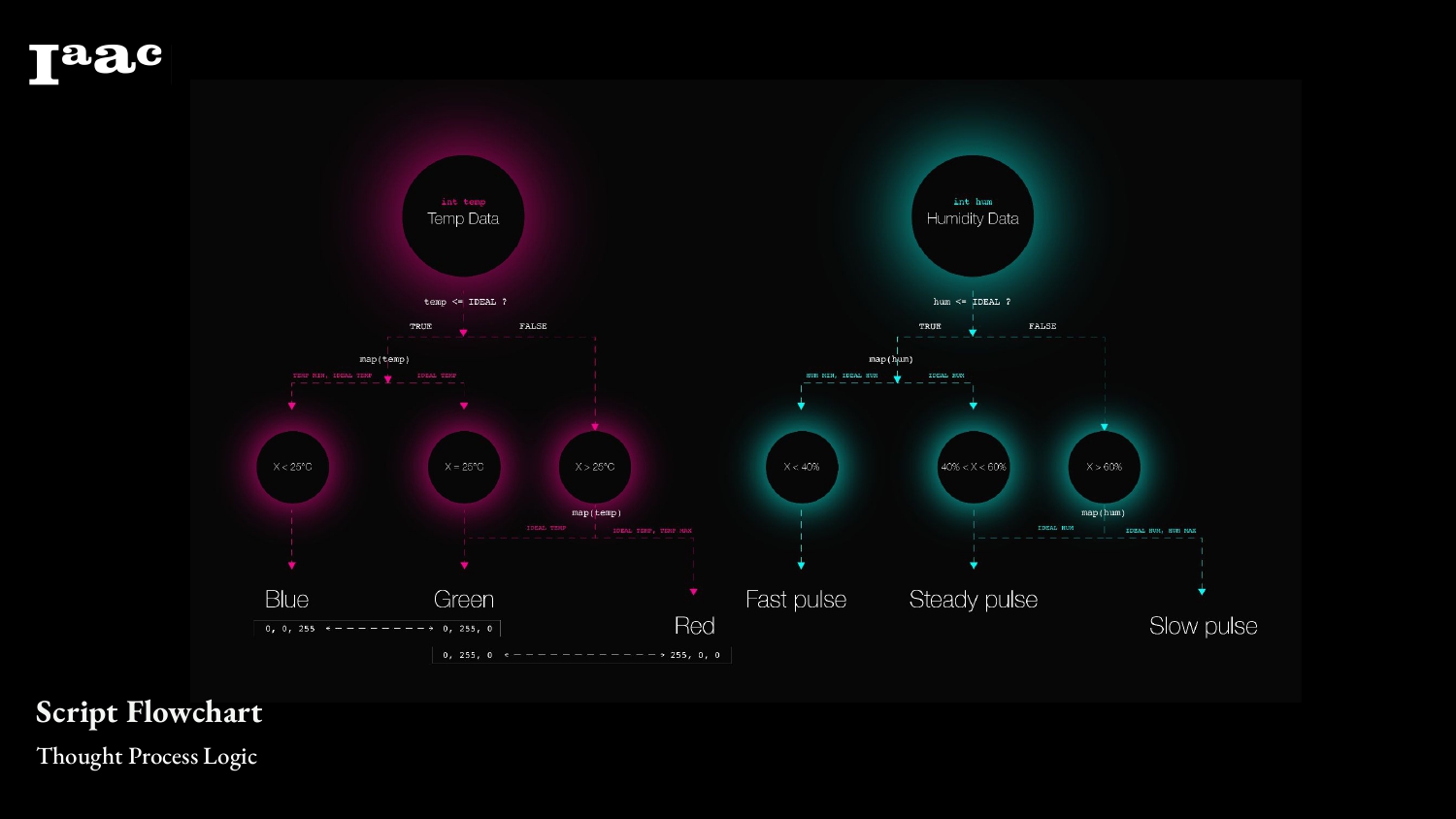
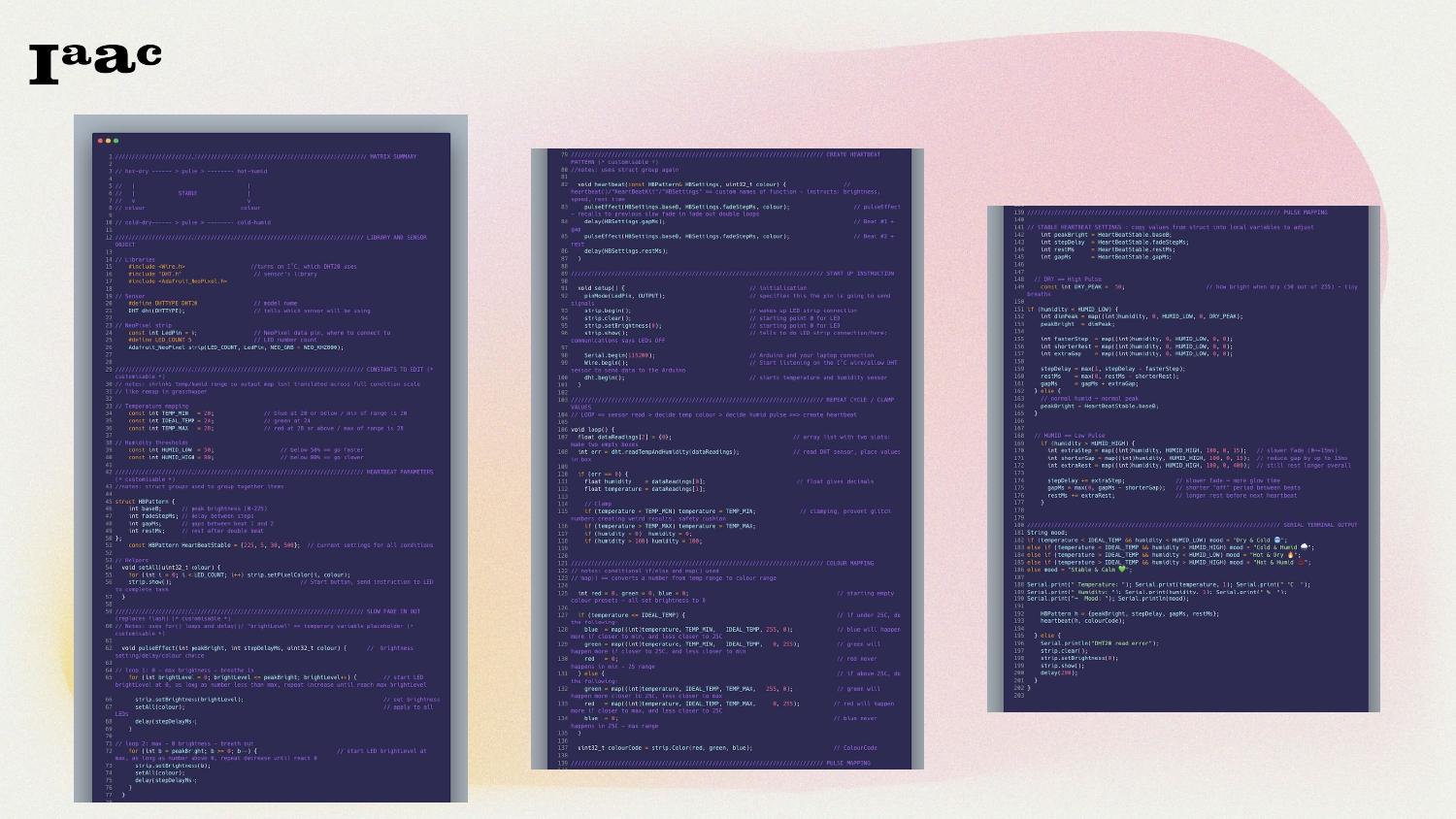
The ClimaColourCode
ClimaColour Code uses a temperature and humidity sensor to translate live environmental data into a pulsing coloured light.
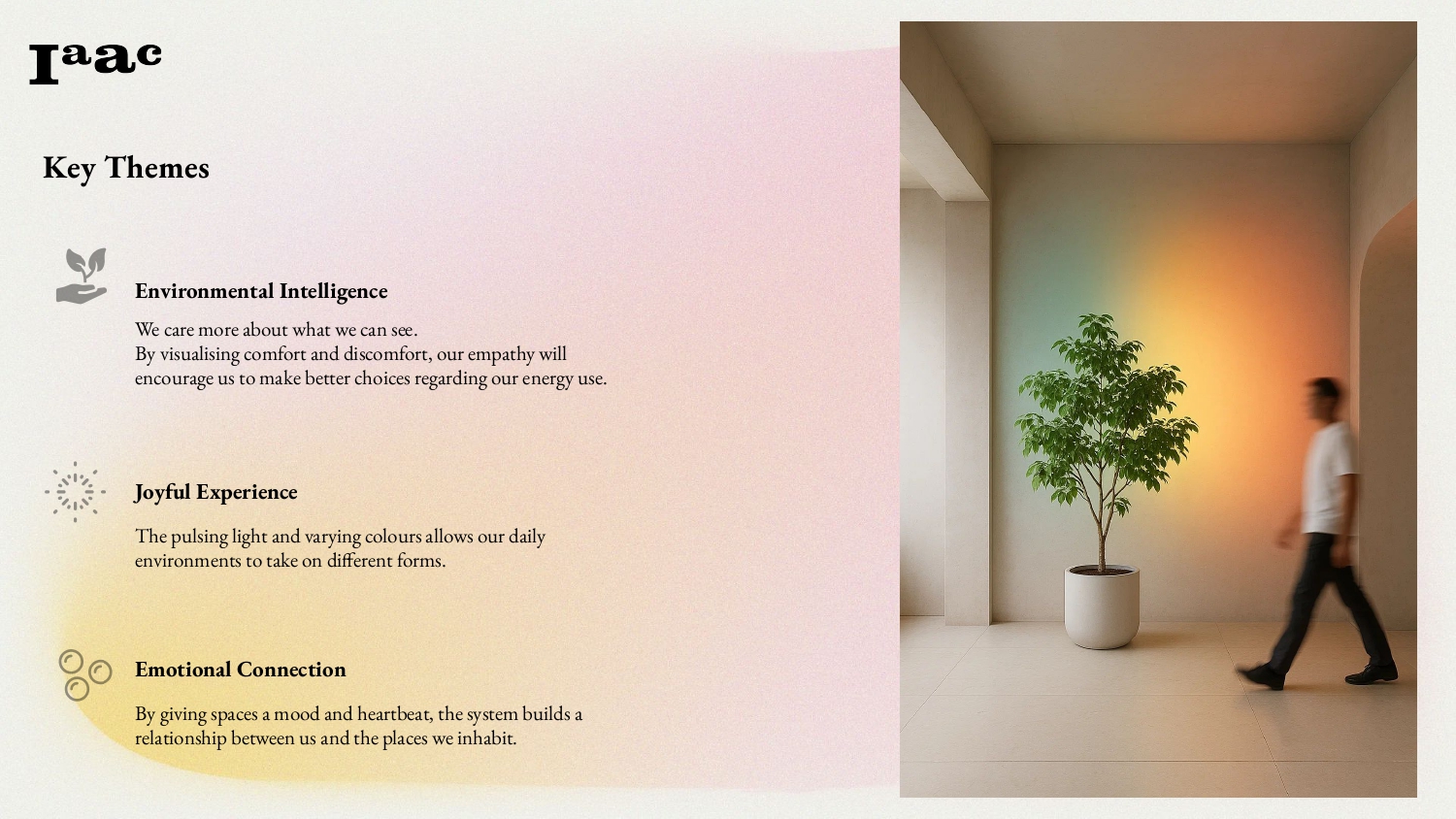
Colour communicates temperature, while brightness and pulse behaviour communicate humidity and environmental intensity. The result gives spaces a visible mood and heartbeat, creating a more intuitive and emotional connection between people and their environment.
- 01Connect soil-moisture sensors to create plant-linked environmental sensitivity.
- 02Add touch sensors so the installation can respond to both people and environmental conditions.
- 03Integrate CO₂ and air-quality monitoring to make invisible indoor-air conditions visible.
- 04Develop the prototype into a larger adaptive lighting installation for shared interior spaces.